Our Blog

Take Me Out to the Ball Game

July 6th, 2022

You’re going to the game! And no matter which sport you follow, there’s so much to enjoy—the best athletes, exciting play, hometown pride—and those delicious concession stands! But if you’re wearing braces, your team spirit might be flagging. Here are a few ideas to help keep your food choices out of foul territory.

You know that you should avoid the foods that can damage braces or stick around your wires and brackets. This means any snacks that are sticky, chewy, hard, or crunchy are benched. So most of the traditional game foods—peanuts, popcorn, nachos, licorice—are just not safe for traditional metal or ceramic braces. Let’s save those for next season.

So what is on the program? You still have many great choices.

  • Ice Cream. A favorite that’s easy on your braces (no nuts or caramel, please). If you want a healthier option, try frozen yogurt or a smoothie.
  • Hearty Snacks. Pretzels and pizza can be too thick and chewy. Go for the mac and cheese, chili, or deli meats on soft bread. And remember, small bites! Check with us to see if hamburgers and hot dogs are safe for your braces.
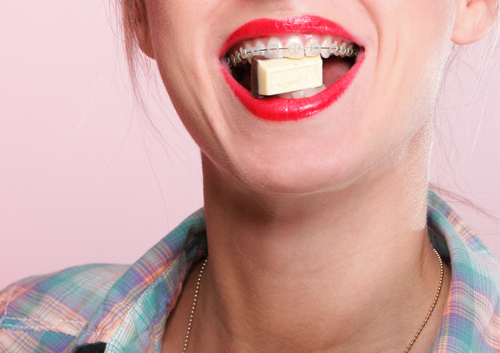
  • Soft Candies and Cookies. Licorice, caramels, and crunchy cookies are out, but soft chocolate bars and moist, tender cookies are still on the menu.
  • Sodas and sports drinks can create a sugary and/or acidic environment which can damage enamel over time. If you do indulge, try to rinse with water ASAP.

Stadium and arena menus contain a lot of starches and sugars, which stick to braces and fuel cavity-causing bacteria. So it’s best to go easy on the snacks. But you don’t have to give up a half-time treat entirely—just enjoy in moderation and be sure to brush thoroughly when you get home.

If you wear clear aligners, your choices are simpler. You can remove your aligners, eat normally, and clean your teeth thoroughly before replacing them. But one flag on this play—remember that you’re supposed to wear your aligners for a set number of hours each day. You don’t want to be putting your treatment behind schedule if the game goes into triple overtime. Keep your eye on the clock, and you should be fine.

Dr. Razavi and our Kanata, Ontario team are always happy to recommend the best food options for your individual orthodontic treatment, and we can help you select a roster of safe and healthy choices. You might miss out on a few of your favorite sports snacks right now, but let’s remember the true fan’s motto: There’s always next year! Taking care of your braces and teeth means faster treatment and healthier teeth. Your All-Star smile will be worth it!

Wax Facts

June 29th, 2022

In the long run, wearing braces is so worth it. Whether you’re working toward straight teeth, an improved bite, or both, you’ll end up with a beautiful smile! But sometimes, in the short run, they can be really annoying. Braces can irritate your lips, tongue, and cheeks while you are getting used to them or after an adjustment. Or a problem wire can poke the inside of your mouth and you can’t see us immediately for a repair. At times like these, Dr. Razavi will recommend orthodontic wax to make your life more comfortable.

  • What is Orthodontic Wax?

Orthodontic wax is made from non-toxic products like beeswax, carnauba wax, and paraffin wax. Some products might contain extras like vitamin E, aloe, or flavorings. The soft wax covers the bracket or wire that is bothering you with a smooth surface that won’t irritate sensitive mouth tissue and will give sore areas a chance to heal.

  • What if I Swallow a Piece?

All dental wax is made of non-toxic ingredients. If you accidentally swallow a bit, no need to worry.

  • Is It Hard to Apply?

It’s not hard, but it takes a bit of practice. First, locate the wire or bracket that is causing the problem. You might know where it is right away, or be able to discover it by discovering which sharp bracket or wire is across from the sore spot in your mouth.

Always wash your hands first. Brush and floss, so you will have a clean surface to apply the wax. The drier the surface, the better the wax will stick, so let the area air dry or use something clean such as sterile gauze to dry around the bracket.  

The wax is actually quite easy to work with. Break off a small piece of wax (no bigger than the size of a popcorn kernel or a pea), roll it in your fingers to soften it, and press the wax firmly but carefully over the problem bracket or wire until it sticks. Rub until the wax is smooth. Don’t worry, we will be happy to show you just how it’s done.

  • Can I Eat with Wax in Place?

If you find that you can eat without much irritation, it’s better to eat without wax over your braces. Remove the wax before eating and brush carefully to remove any food particles from your braces before applying new wax. If you do snack while using wax, be sure to change it after you eat. Wax, after all, sticks easily to your braces—and food particles stick to wax! Not a good look, and not good for your teeth.

  • Brushing and Flossing

Take off any wax before you brush and floss. Your toothbrush will thank you!

You probably have lots of other questions. Can you sleep with wax on your braces? Will it help you be more comfortable at trumpet practice? That’s why we’re here! If you have any questions at all about orthodontic wax and how to use it, call our Kanata, Ontario office. We want to make sure that the months you spend wearing braces are as comfortable as possible on your way to a lifetime of beautiful smiles. It’s so worth it!

Which Retainer is Right for You?

June 22nd, 2022

Brackets and wires, clear aligners, lingual braces, regular brackets, self-ligating braces, elastics, spacers—you and your orthodontist have had to narrow down a lot of choices to discover the best treatment for your orthodontic needs. Now that the end of treatment is in sight, there’s one more important choice left—your retainer!

Do I Need a Retainer?

No retainer at all is probably the one option that’s off the table from the start. It’s not just your teeth that have changed position; it’s the bone and ligaments holding them that have changed as well.

A retainer prevents your teeth from moving away from their new, ideal location while your bones and ligaments are stabilizing. This process takes months, so keeping your teeth in place as your bone rebuilds and regains density is crucial.

What Are Your Retainer Options?

Three of the most popular retainer options available at our Kanata, Ontario office include:

  • Hawley Retainers

This is the traditional retainer, with wires to hold your retainer in place and to keep the teeth properly aligned. The wires are attached to an acrylic plate molded to fit the roof of your mouth or around your bottom teeth. You can customize the acrylic base with colors and patterns for a one-of-a-kind look.

Hawley retainers are adjustable, so minor realignments can take place if necessary. The wire in front of your teeth makes these retainers visible, but, after several months of wearing them all day long, you may end up wearing them only at night.

Hawley retainers are removable, so you need to make sure they are safely in a case when you’re not wearing them. Minor damage can often be repaired, but it’s better to be proactive.

  • Clear Plastic Retainers

These retainers look like clear aligners. They are formed by heating a thin piece of plastic and vacuum-forming it around a model of your teeth to create a custom, comfortable fit.

Clear retainers are almost invisible when worn, and can be removed when you eat or drink—which they should be, because food particles and liquids can be trapped inside them.

When you’re not wearing it, a clear retainer should always be in its case, because it must be replaced if the plastic is warped, cracked, or broken.

  • Fixed Retainers

A fixed retainer is a small single wire bonded to the back of specific teeth, commonly the six bottom front teeth. Because fixed retainers don’t allow the teeth to move at all, they are often recommended for patients who had serious misalignments, extremely crowded teeth, or teeth with large gaps between them.

Many patients like fixed retainers because they keep teeth in perfect alignment, they won’t be seen, they’re comfortably small, and they can’t end up in the cafeteria recycling bin because you forget to replace them after lunch!

Fixed retainers are usually quite durable, but you’ll need to pay attention to your diet, because crunchy and chewy foods can put pressure on the retainer and damage it. These retainers also require special care with brushing and flossing, to make sure the teeth bonded to the wire stay clean and plaque-free.

The Right Retainer

The process of stabilizing your teeth in the jaw takes time. Choosing your retainer will depend in part on how long and how often you need to wear it: fulltime for months or for years, at night after several months of day-and-night wear, or long-term to make sure your orthodontic work lasts.

And there are other variables, as well. Your retainer might need to be removable. It might need to be adjustable. You might need a retainer for just your upper teeth, just your lower teeth, or both. All these factors and more need to be taken into consideration before deciding on your ideal retainer.

Fixed, removable, wire, plastic, colorful, clear—which retainer is right for you? The one that helps you retain the beautiful smile you’ve worked for all these months. Talk to Dr. Razavi to discover the retainer that will protect that smile for years to come.

Which Retainer is Right for You?

June 22nd, 2022

Brackets and wires, clear aligners, lingual braces, regular brackets, self-ligating braces, elastics, spacers—you and your orthodontist have had to narrow down a lot of choices to discover the best treatment for your orthodontic needs. Now that the end of treatment is in sight, there’s one more important choice left—your retainer!

Do I Need a Retainer?

No retainer at all is probably the one option that’s off the table from the start. It’s not just your teeth that have changed position; it’s the bone and ligaments holding them that have changed as well.

A retainer prevents your teeth from moving away from their new, ideal location while your bones and ligaments are stabilizing. This process takes months, so keeping your teeth in place as your bone rebuilds and regains density is crucial.

What Are Your Retainer Options?

Three of the most popular retainer options available at our Kanata, Ontario office include:

  • Hawley Retainers

This is the traditional retainer, with wires to hold your retainer in place and to keep the teeth properly aligned. The wires are attached to an acrylic plate molded to fit the roof of your mouth or around your bottom teeth. You can customize the acrylic base with colors and patterns for a one-of-a-kind look.

Hawley retainers are adjustable, so minor realignments can take place if necessary. The wire in front of your teeth makes these retainers visible, but, after several months of wearing them all day long, you may end up wearing them only at night.

Hawley retainers are removable, so you need to make sure they are safely in a case when you’re not wearing them. Minor damage can often be repaired, but it’s better to be proactive.

  • Clear Plastic Retainers

These retainers look like clear aligners. They are formed by heating a thin piece of plastic and vacuum-forming it around a model of your teeth to create a custom, comfortable fit.

Clear retainers are almost invisible when worn, and can be removed when you eat or drink—which they should be, because food particles and liquids can be trapped inside them.

When you’re not wearing it, a clear retainer should always be in its case, because it must be replaced if the plastic is warped, cracked, or broken.

  • Fixed Retainers

A fixed retainer is a small single wire bonded to the back of specific teeth, commonly the six bottom front teeth. Because fixed retainers don’t allow the teeth to move at all, they are often recommended for patients who had serious misalignments, extremely crowded teeth, or teeth with large gaps between them.

Many patients like fixed retainers because they keep teeth in perfect alignment, they won’t be seen, they’re comfortably small, and they can’t end up in the cafeteria recycling bin because you forget to replace them after lunch!

Fixed retainers are usually quite durable, but you’ll need to pay attention to your diet, because crunchy and chewy foods can put pressure on the retainer and damage it. These retainers also require special care with brushing and flossing, to make sure the teeth bonded to the wire stay clean and plaque-free.

The Right Retainer

The process of stabilizing your teeth in the jaw takes time. Choosing your retainer will depend in part on how long and how often you need to wear it: fulltime for months or for years, at night after several months of day-and-night wear, or long-term to make sure your orthodontic work lasts.

And there are other variables, as well. Your retainer might need to be removable. It might need to be adjustable. You might need a retainer for just your upper teeth, just your lower teeth, or both. All these factors and more need to be taken into consideration before deciding on your ideal retainer.

Fixed, removable, wire, plastic, colorful, clear—which retainer is right for you? The one that helps you retain the beautiful smile you’ve worked for all these months. Talk to Dr. Razavi to discover the retainer that will protect that smile for years to come.